
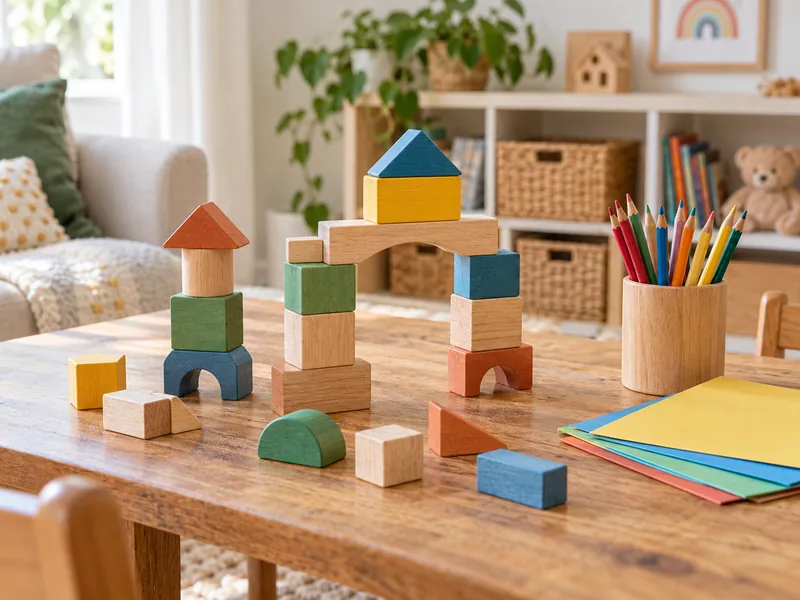
STEM stands for science, technology, engineering and mathematics. The label covers very different activities: assembling, observing, sorting, solving a problem or exploring a mechanism. It does not guarantee that a child will enjoy a toy. This guide is for parents and adults choosing a gift, with particular attention to the setting in which it will be used.
Notice the child's interests before the theme on the box
Does the child enjoy building freely, following a sequence of steps or seeing what changes when they move a piece? Choose an activity that matches that interest. A complex kit may require a lot of help; a simpler toy may leave more room for invention. Do not confuse a large number of pieces or an educational promise with the enjoyment of playing again. This guide does not guarantee any learning outcome.
Follow age recommendations and warnings
Use the manufacturer’s age guidance and warnings for the exact model. The Health Canada guidance cited here is a Canadian reference. Search for the exact model in recalls for the country where it was sold and the country where you will use it. Check small parts, batteries and magnets, and follow the instructions about adult supervision. A STEM label does not replace these checks.
Plan the space, time and adult involvement
Look at the surface area needed, the number of steps and any supplies that are not included. An activity that needs to dry or stay assembled for several days requires a dedicated space. Check whether the instructions are available in a language understood by the adult and child and whether the child can follow them with the help you plan to provide. For a gift, first ask the responsible adult whether batteries, noise, screens or messy materials are suitable for the household.
Check digital requirements and storage
If an app is required, review compatibility, potential fees, account requirements and the information requested before choosing. An activity advertised as self-contained may still depend on one. Finally, think about lost pieces and storage between play sessions. Clearly marked bags or compartments can make it easier to start again, but they too must be stored in a way that suits the ages of the children present.
Compare ways of playing
This comparison describes activity formats without rating a toy or predicting learning. The exact model’s age guidance and warnings remain the first filter.
| Format | Question for the responsible adult |
|---|---|
| Open-ended building | Does the child enjoy inventing and keeping a creation? Where will pieces go between sessions? |
| Guided project | Who can read the steps and help? Can the project stay set up until it is finished? |
| App-based activity | Which device, language, account and fees are required? Does screen use suit the household? |
Start with play conditions that fit the household. Then compare age-appropriate models within that format, instead of comparing piece counts across different types of activity.
Before you decide
Check off the points you have verified as you read. The site does not save this checklist.
General guidance, without product testing or personalized professional advice. Read about our method.